2016 Nobel Laureate in Chemistry
president and CEO of the Houston Methodist Research Institute in Houston, Texas
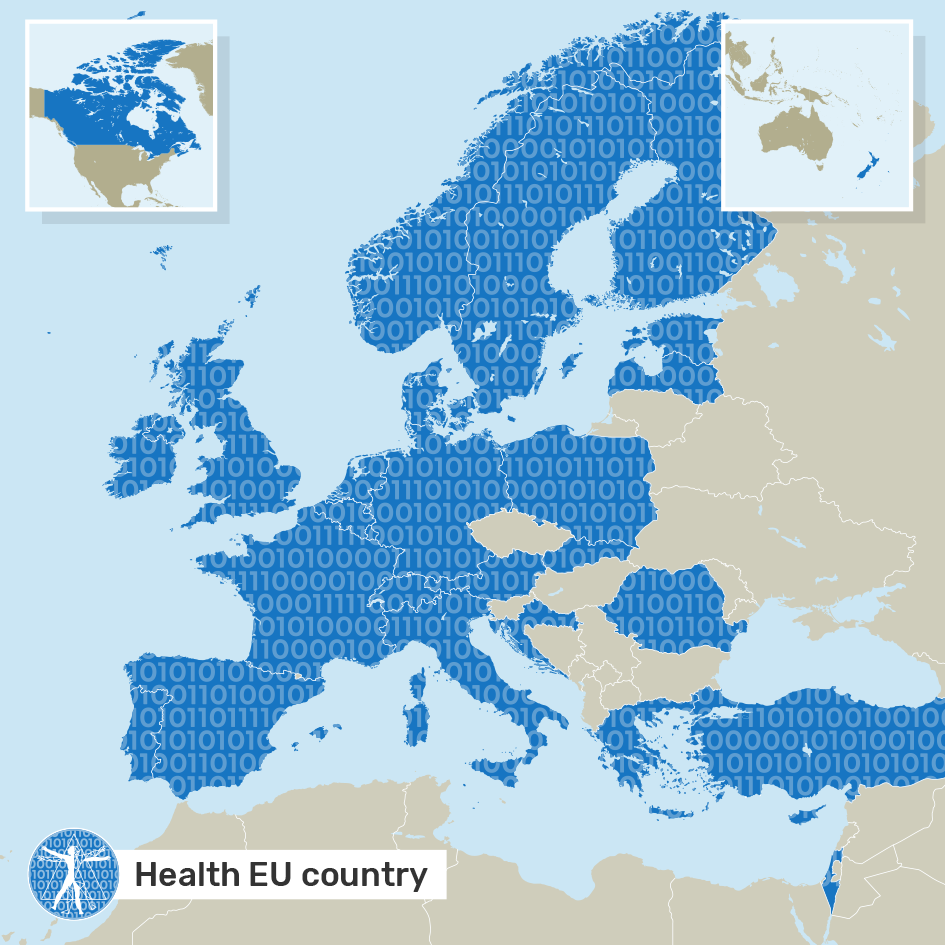
Health EU initiative makes important steps towards strategic recognition and launches its Manifesto to unify Digital Healthcare in Europe!
In a competition with many excellent projects, and, as a result of the 2nd phase evaluation of Coordination and Support Actions for FET Flagships, Health EU was recognized as the leading project on Human Avatars and Digital Healthcare and is currently in a potential position for future funding.
Health EU management is looking with strong conviction into a bright future of a European mission on creating the first European Integrative Human Avatar Platform under the umbrella of Digital Healthcare enabled by Artificial Intelligence and Internet of Things.
Today, we launch the Health EU Manifesto to unify all forces in medicine, biology, social sciences and engineering Europe under the visionary concept of Human Avatars for personalized, preventive and participatory healthcare. We invite all interested universities, research institutes, hospitals, industries and citizen/patient associations and other stakeholders to sign our Manifesto as an expression of direct support!

Health EU – Human avatars to prevent and cure diseases
Nothing less is the aim of Health EU (healthy you!), an advanced FET Flagship multidisciplinary research initiative in Europe aiming for a paradigm shift to healthcare and for a future sustainable healthcare system.

Health EU will boost European innovation and create disruptive advances related to big data analytics, smart micro/nano-systems, nanomedicine and new healthcare services and safer and more effective drugs. It will directly contribute to standards for privacy and security of healthcare data, jointly driven by technology and context. Health EU FET Flagship will provide a truly sustainable approach to healthcare and a better Quality of Life to European citizens.
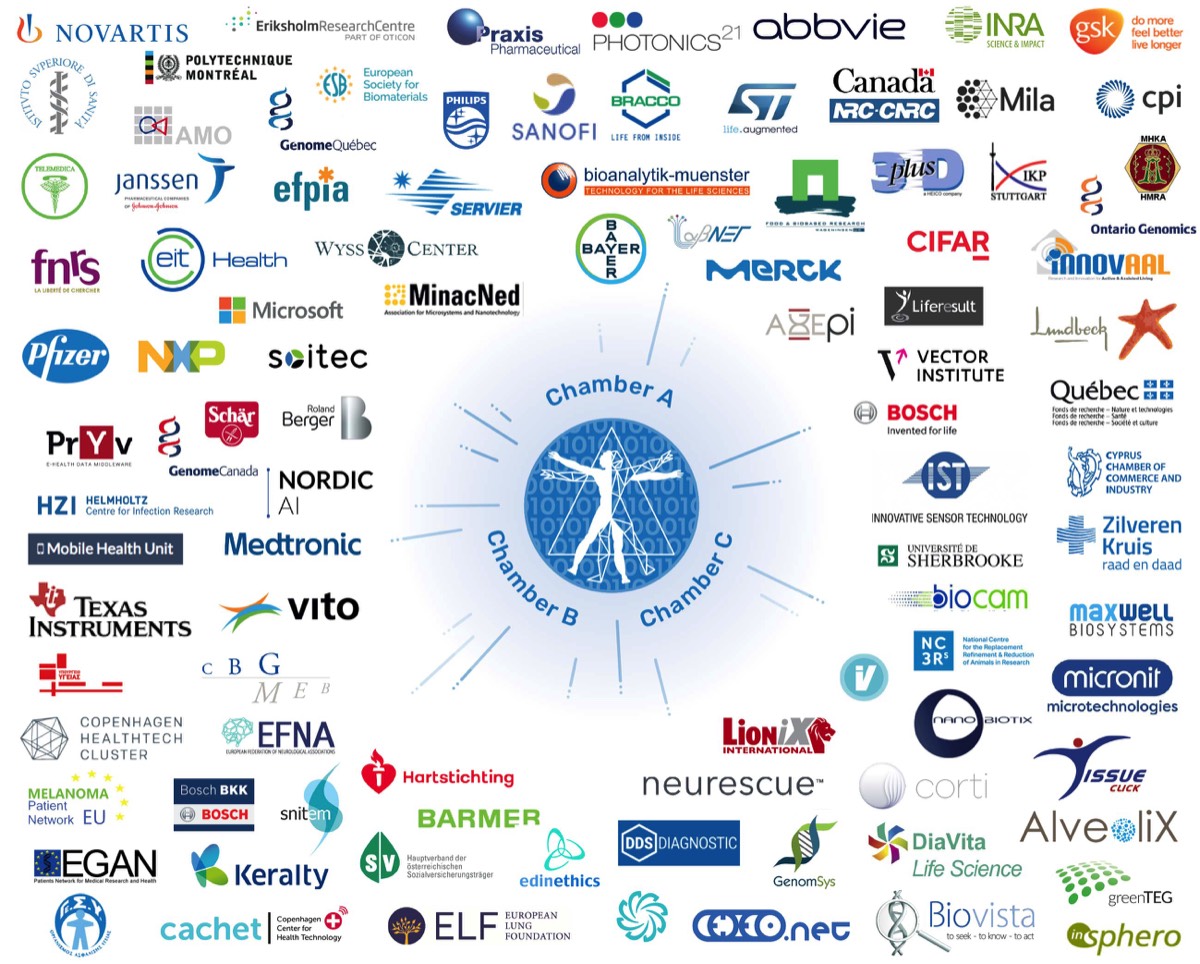
Partners

 Alexander M.M. Eggermont is Professor of Oncology and Director General of the Cancer Institute Gustave Roussy, the premier comprehensive cancer center in Europe. His is the current President of the European Academy of Cancer Sciences (EACS) and the Chair of the Consortium Cancer Core Europe. He is a surgeon and tumor immunologist and a melanoma, sarcoma and drug development specialist, in particular immunotherapy, and a fellow of the NCI-NIH Surgery Branch (Steven Rosenberg). Amongst others he was the PI of TNFalpha, Pegylated Interferon, Ipilimumab and Pembrolizumab trials that all resulted in FDA and EMA approvals. He was Head and Professor of Surgical Oncology at Erasmus University Medical Center 2000-2016, and former president of ECCO and EORTC. Among many academic awards he received Joseph Maisin Chair of the Université de Louvain, Society or Surgical Oncology Clinical Research Award, Dutch Surgical Society Award, ASCO Statemens Award, University of Essen Doctorate Honoris Causa.
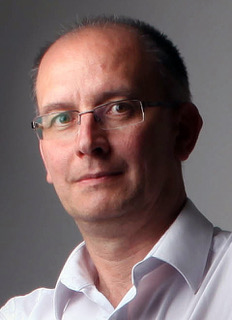 Adrian M. Ionescu is a Professor and Director of the Nanoelectronic Devices Laboratory at Ecole Polytechnique Fédérale de Lausanne (EPFL. His group pioneered new concepts in beyond CMOS devices and technologies. He is the recipient of the IBM Faculty Award 2013 and of the André Blondel Medal 2009 of the Society of Electrical and Electronics Engineering, Paris, France. In 2018 he and his co-authors received the IEEE George Smith award for the best paper of IEEE EDL, a leading journal of the Electron Devices Society. He is an IEEE Fellow and a member of the Swiss Academy of Sciences (SATW). In 2016 he was awarded an Advanced ERC Grant to develop energy efficient millivolt transistors and sensors for Internet-of-Things. In 2018, he was appointed as a Chair of the PE7 Committee of the European Research Council (ERC). He was coordinator of many FP6, FP7 and H2020 projects, including the FET Flagship CSA Guardian Angels for a Smarter Life, invited as one of the four finalists in the previous Flagship competition.
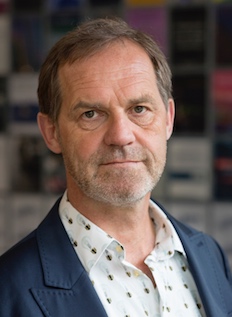 Albert van den Berg received his PhD in 1988 at the University of Twente. From 1988-1993 he worked in Neuchatel, Switzerland, at the CSEM and the University (IMT) on miniaturized chemical sensors. In 2000 he was appointed as full professor on Miniaturized Systems for (Bio)Chemical Analysis at the University of Twente. He published over 450 peer-reviewed publications and from his group over 10 spin-off companies started. He received several honors and awards such as Simon Stevin (2002), two ERC Advanced (2008, 2015) and three ERC Proof of Concept (2011, 2013, 2016) grants, Spinoza prize (2009), Distinguished University Professor (Twente, 2010), Consulting Professor at NPU (China), 2017) and was board member of the Royal Dutch Academy of Sciences (KNAW) (2011-2016). In 2017 he became co-PI of the Max Planck - University of Twente Center for Complex Fluid Dynamics, and was appointed (co)director of MESA+ institute for Nanotechnology in 2018.
Mandates: Chairman of the ETPN, European Technology Platform on Nanomedicine; Chairman of ESTHER, the European Industry Driven Initiative on Emerging and Strategic Technologies for Healthcare, in cooperation with Medtech-Europe.